
Expect to pay roughly $50 to $250 per acre or $85 to $150 per hour for bush hogging, depending on how overgrown the land is and how contractors bill the job. Flat, maintained fields sit near the low end and price by the acre; rough, obstacle heavy, or first time cuts usually get billed hourly. Most contractors also charge a minimum fee, often $150 to $250, to cover the trip out.
TL;DR:
- Smaller, flat, well-maintained fields generally cost $50 to $75 per acre, but minimum fees often make single-acre jobs more expensive per acre than larger jobs.
- Heavily overgrown land with thick brush or saplings can cost as much as $150 to $250 per acre, with hourly rates rising to $85 to $120 for obstructed or complex terrain.
- Factors such as terrain obstacles, vegetation thickness, equipment size, and mobilization significantly influence pricing differences between jobs.
- Most quotes are based on either per-acre rates or hourly billing, and understanding which model applies helps in accurately comparing contractor offers.
- Providing detailed land condition information and asking about mobilization fees upfront ensures more accurate quotes and prevents unexpected costs.
Table of Contents
- How Much Does Bush Hogging Cost Per Acre and Per Hour?
- What Drives Bush Hogging Pricing Up or Down?
- How Do Pricing Models Work and How Do You Read a Quote?
- How Do You Get an Accurate Bush Hogging Quote?
- How Tri-State Brush Control & Gravel Prices Land Clearing and Mowing Work
- What This Pricing Data Actually Tells You
- Get a Bush Hogging Price Without Waiting on a Callback
- Where These Pricing Ranges Come From
- Sources
- FAQ
How Much Does Bush Hogging Cost Per Acre and Per Hour?
The number you get quoted depends almost entirely on two things: how the contractor bills the job, and what condition your land is in. Both matter more than the acreage itself.
Per-acre pricing works well when a field is open, mowable, and roughly consistent from one end to the other. A contractor can walk the property once, estimate the time it will take, and quote a flat rate. Rates cluster around three tiers:
- Flat, maintained fields: $50 to $75 per acre
- Moderate overgrowth (weeds, light brush, grass gone to seed): $75 to $150 per acre
- Heavy overgrowth (thick brush, saplings, multi-year neglect): $150 to $250 per acre
Hourly pricing takes over when a contractor can't predict how fast the work will go. Obstructed ground, unknown debris, steep grades, or fields nobody has mowed in years all push contractors toward billing by the hour instead of guessing on an acreage rate. A tractor with a 6-foot cutter typically runs $85 to $120 per hour, and broader regional data puts the range closer to $60 to $150 per hour depending on machine size and market.
Here's how those numbers play out on real properties:
| Property Size | Flat/Maintained ($50-75/acre) | Moderate Overgrowth ($75-150/acre) | Heavy Overgrowth ($150-250/acre) |
|---|---|---|---|
| 1 acre | $50-75 (likely hits minimum fee) | $75-150 | $150-250 |
| 5 acres | $250-375 | $375-750 | $750-1,250 |
| 10 acres | $500-750 | $750-1,500 | $1,500-2,500 |
Notice that 1-acre column. On small lots, the per-acre math often loses to the contractor's minimum charge, which is why a single acre of light brush can cost more per acre than a 10-acre field in the same condition. That's not padding. It reflects the fact that loading, hauling, and unloading a tractor takes the same amount of time whether you're cutting one acre or five.
North Carolina contractor data backs up these bands closely, showing most jobs landing between $75 and $150 per acre with hourly rates in the $60 to $150 range. Georgia contractors report a similar spread, with heavy overgrowth pushing rates to $150-250 per acre and minimum charges kicking in below a certain acreage threshold. Regional write-ups from Michigan and Wisconsin land in a slightly tighter band, $60 to $150 per acre or $75 to $125 per hour, which tells you these numbers hold up reasonably well outside any single state.
If your quote falls well outside these bands in either direction, ask why. A lowball number might mean a contractor is underestimating the work (and will hit you with change orders), while a high number might reflect terrain you didn't account for, like a hidden slope or a fence line running through dense brush.
What Drives Bush Hogging Pricing Up or Down?
Land condition is the single biggest lever in any bush hogging quote, but it's not the only one. Five factors tend to move a price more than anything else.
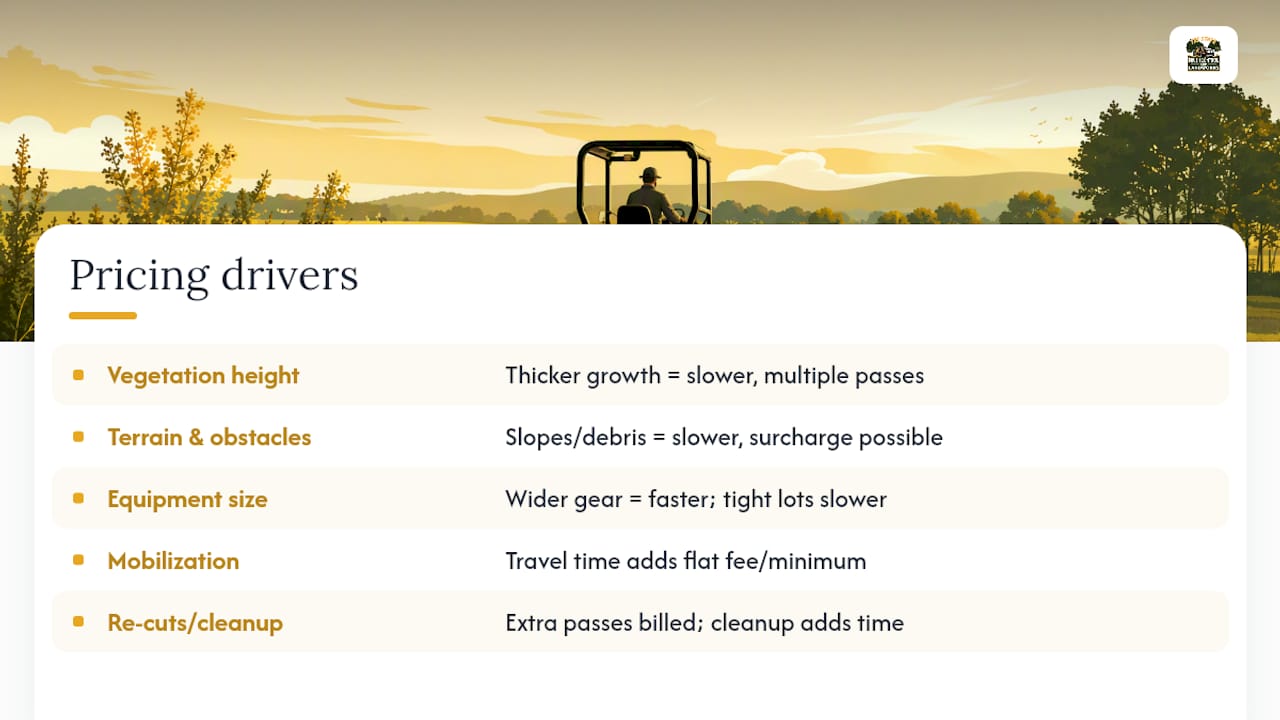
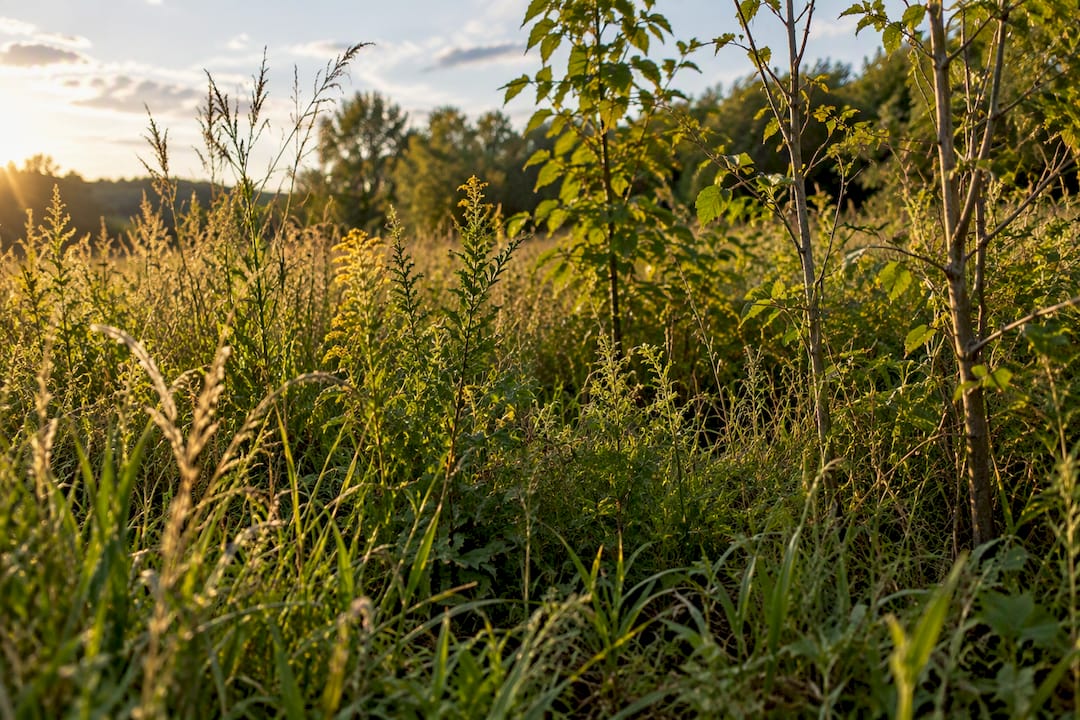
Vegetation height and stem thickness. Grass and light weeds are one pass with a rotary cutter. Woody stems and saplings over an inch or two thick force multiple passes, dull blades faster, and slow the tractor down considerably. A field that looks similar to a passerby can price wildly differently depending on what's actually growing in it.
Terrain and obstacles. Slopes, buried rocks, old fence posts, junk piles, and standing water all slow production and raise risk to the equipment. Contractors price around these hazards, and many add a surcharge once obstacles pass a certain density, because dodging debris turns a two hour job into a four hour one.
Equipment size. A 5-foot cutter behind a compact tractor covers less ground per hour than a 15-foot batwing mower behind a larger rig. Wider equipment usually means faster production and a lower effective per-acre cost, but it also needs more room to maneuver, so tight or wooded lots sometimes require smaller, slower equipment regardless of acreage.
Mobilization and travel time. Getting a tractor, trailer, and crew to your property costs money before a single blade turns. This is why contractors commonly build in a 2 to 3 hour minimum or a flat mobilization fee rather than pricing purely by acreage. Rural properties far from a contractor's base often see this cost rolled into the quote as a separate line.
Re-cuts and cleanup. If a first pass leaves the field rougher than expected, or if a customer asks for a second pass to catch missed patches, that's additional billable time. Ask upfront whether the quote includes one pass or however many it takes to hit a specific result.
Pro Tip: Ask any contractor to itemize mobilization separately from the mowing rate. That single line item is often the reason a small job costs more per acre than a large one, and knowing it upfront lets you compare quotes on equal footing.
How Do Pricing Models Work and How Do You Read a Quote?
Contractors generally choose between three pricing structures, and understanding which one you're being quoted changes how you should evaluate the number.
| Pricing Mode | Typical Range | Best For | Common Surcharges/Minimums |
|---|---|---|---|
| Per acre (open field) | $50-250/acre | Flat, mowable, predictable ground | $150-250 minimum on small jobs |
| Hourly (mixed/obstructed) | $60-150/hour | Uneven terrain, unknown debris, first-time cuts | 2-3 hour minimum common |
| Forestry mulching | $125-300/hour or $400-800/acre | Saplings, dense brush, land reclamation | Higher equipment and disposal costs baked in |
The forestry mulching row costs noticeably more because it's solving a different problem. Bush hogging cuts vegetation down and leaves it on the ground to break down over time. Forestry mulching grinds woody material into mulch on contact, which takes heavier, more expensive equipment and works better on land that's reverting to woods rather than land that just needs a seasonal trim. If your saplings are already thicker than two or three inches, plan on budgeting for mulching, not mowing, because bush hogging won't be a permanent fix at that growth stage.
Here's how to sanity check an hourly quote against a per-acre expectation:
- Ask the contractor for their equipment's cutting width and estimated speed. A 6-foot cutter on open, flat ground can theoretically cover 2.4 to 3 acres per hour, though real-world speeds usually run slower.
- On mixed or obstructed ground, use a more conservative production estimate, closer to 1.5 to 2 acres per hour, rather than the theoretical maximum.
- Multiply the hourly rate by the estimated hours needed for your acreage, then divide by your total acres to get an effective per-acre cost.
- Compare that number against the per-acre bands above. If it's dramatically higher, ask what's driving it, whether that's terrain, debris density, or simple overpricing.
Regular maintenance mowing also tends to run cheaper than one-time catch-up work. Some regional guides note discounts of 15 to 20 percent off the per-visit rate for customers who schedule recurring service, since the equipment isn't fighting through a full year's growth every time it shows up.
How Do You Get an Accurate Bush Hogging Quote?
A vague description of your property gets you a vague quote, and vague quotes are how change orders happen mid-job. Sending a contractor the right information upfront gets you a number you can actually trust.
Before you request pricing, gather:
- Recent photos of the field from a few different angles
- Your property's approximate boundaries or a pin dropped on a map
- A rough acreage estimate, even if it's not exact
- Notes on fence lines, gates, or narrow access points
- Any known hazards: old wells, buried debris, steep drop-offs, standing water
Once you're talking to a contractor, ask these questions directly:
- Will this job be priced per acre or per hour, and why?
- Is there a minimum charge, and what does it cover?
- What happens if you hit a hidden rock or stump and damage a blade, does that cost get passed to me?
- Are you insured, and can you provide proof of liability coverage?
- What happens to the cut material, does it stay on site or does it get hauled away?
Get the scope in writing before work starts. A written scope should spell out how many passes are included, whether stumps get ground down or left standing, and whether any debris gets hauled off versus left to decompose. This isn't excessive caution. It's the difference between a $500 job and a $500 job plus a surprise $200 disposal fee you didn't know was coming.
How Tri-State Brush Control & Gravel Prices Land Clearing and Mowing Work
Some land clearing companies build quotes around the same logic contractors use nationally, matching the pricing model to what the land actually needs rather than defaulting to one method for every job. For dense brush, saplings, and land that's reverting to woods, some providers use a one-pass forestry mulching approach that grinds vegetation into mulch on-site in a single pass, skipping the burning or hauling that heavier reclamation work usually requires.
For fields that just need routine cutting rather than full clearing, bush hogging is the more cost-effective call, and Tristatebrushandgravel's instant pricing tool gives property owners a number without waiting days for a callback. Jobs of any size get handled, from a single overgrown acre to multi-acre commercial parcels, and flexible financing is available for larger clearing projects where the upfront cost would otherwise be a barrier.
What This Pricing Data Actually Tells You
Most of the confusion around bush hogging cost comes from comparing quotes that aren't measuring the same thing. A $200 hourly quote and a $100 per-acre quote aren't automatically the cheap one and the expensive one, they're answers to different questions about your land's condition.
The conventional advice to "just get three quotes and pick the middle one" falls apart here, because contractors quoting hourly versus per-acre aren't pricing the same risk. The reader's real job is to figure out which pricing model fits their land before comparing numbers, not after.
If there's one thing worth prioritizing, it's asking about mobilization and minimums before anything else. That single line item explains more pricing confusion than terrain, equipment, or vegetation combined, especially for anyone with a small lot wondering why their per-acre cost looks so much higher than a neighbor's ten-acre job.
— Yoshua
Get a Bush Hogging Price Without Waiting on a Callback
Tristatebrushandgravel skips the multi-day quote cycle other contractors run on. Instead of scheduling a site visit and waiting for a callback, you can get a price estimate directly through the instant pricing tool, which asks for your property location, rough acreage, and current land condition to generate a working number right away.
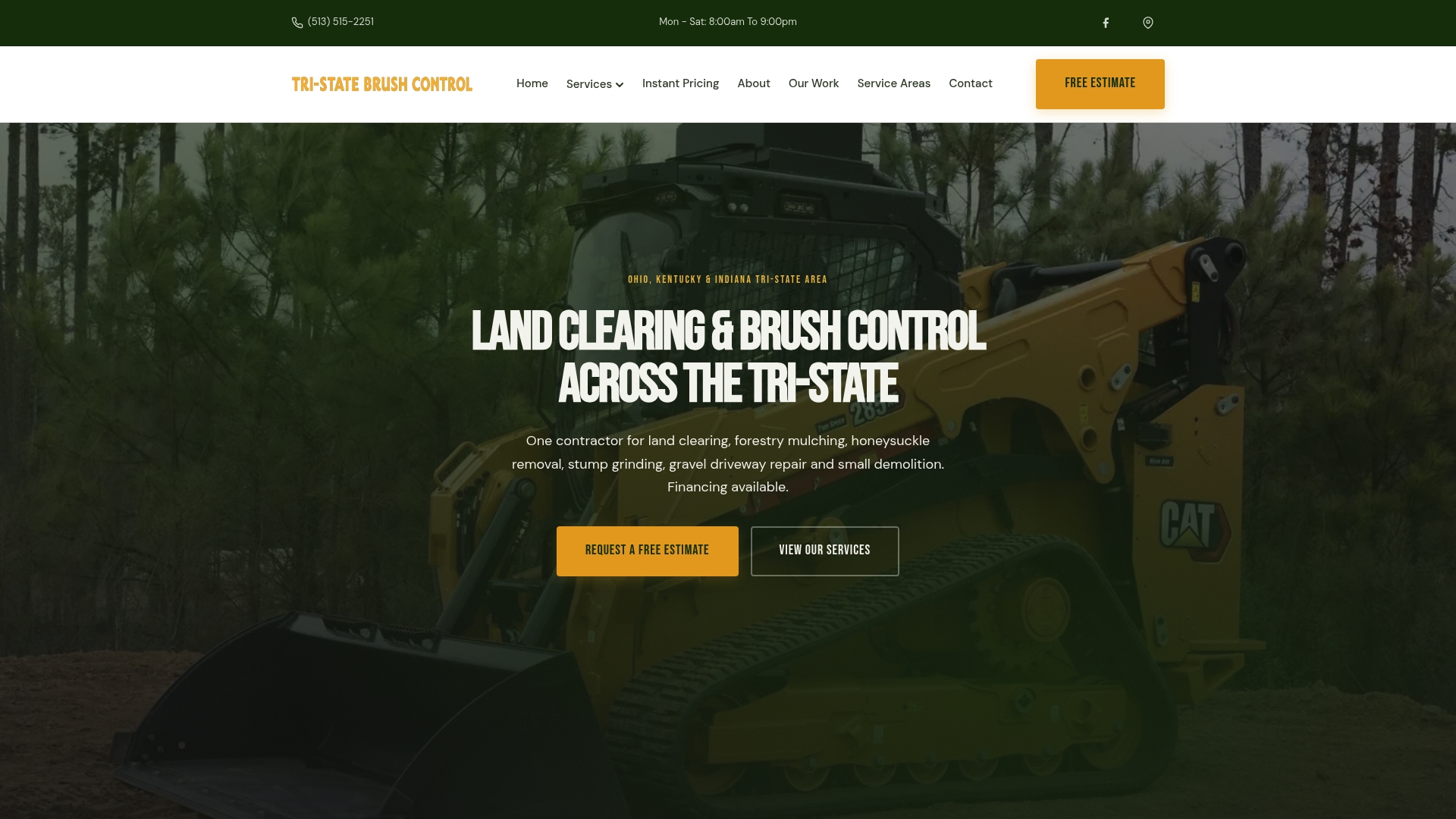
That estimate covers the scope of work based on what you describe, and a follow-up site check confirms details like access points, obstacles, or debris that photos alone might miss. For larger acreage or combined jobs, like bush hogging paired with stump grinding or driveway repair, flexible financing options are available so the upfront cost doesn't have to be a barrier. Browse the full range of land clearing and property services to see what fits your situation, or head straight to the instant pricing tool to get a number on your property today.
Where These Pricing Ranges Come From
The per-acre and hourly figures throughout this article come from several contractor-facing sources that track real market pricing rather than theoretical estimates. The GreenPal contractor survey supplied the baseline hourly ranges for tractor and cutter combinations, along with production rate benchmarks used to convert hourly bids into per-acre estimates.
Regional guides filled in the geographic variation: a Georgia land management guide provided detailed per-acre bands tied to field condition and minimum charge thresholds, while a North Carolina contractor resource confirmed similar per-acre and hourly figures for a different regional market. A West Michigan regional write-up rounded things out with a side-by-side look at how bush hogging pricing compares to forestry mulching costs in practice.
Sources
FAQ
How much do contractors charge for bush hogging?
Most contractors charge $50 to $250 per acre depending on overgrowth, or $60 to $150 per hour when billing hourly for obstructed or uncertain ground. Small jobs often get charged a minimum fee, typically $150 to $250, regardless of acreage.
How much does a 10-foot bush hog cost to hire?
Rental and hiring costs for equipment in that size class generally track the same hourly ranges as smaller cutters, since pricing depends more on labor time and land condition than blade width alone. A wider cutter can lower your effective per-acre cost by covering more ground per hour, but the base hourly rate still falls within the $60 to $150 range most contractors quote.
How long does it take to bush hog 1 acre?
On open, flat ground, a standard 6-foot cutter can theoretically cover 2.4 to 3 acres per hour, though real-world jobs with obstacles, thick vegetation, or tighter maneuvering usually run slower, varying depending on conditions.
What is the average cost of a brush hog job?
For a mid-sized property with moderate overgrowth, expect somewhere between $75 and $150 per acre, or an hourly rate of $85 to $120 if the contractor bills by time. Tristatebrushandgravel's bush hogging service offers instant pricing so you can see a specific number for your property rather than relying on averages alone.
Is forestry mulching more expensive than bush hogging?
Yes, forestry mulching typically runs $125 to $300 per hour or $400 to $800 per acre, well above standard bush hogging rates. The higher cost reflects heavier equipment and a different outcome: mulching grinds woody brush and saplings into mulch on-site, while bush hogging simply cuts vegetation down and leaves it to decompose.